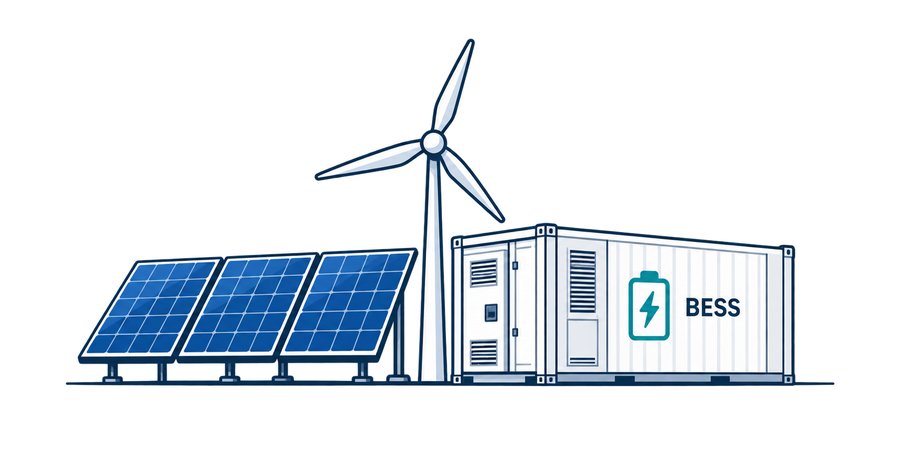
Renewables + Storage for Grid
Solar and batteries are DC

Solid-State Transformers
An integrated medium-voltage-to-DC conversion platform for customer and partner pilots — 3 MW, 13.8 kVAC ↔ 800 VDC, bidirectional, with XPowerOS™ controls.
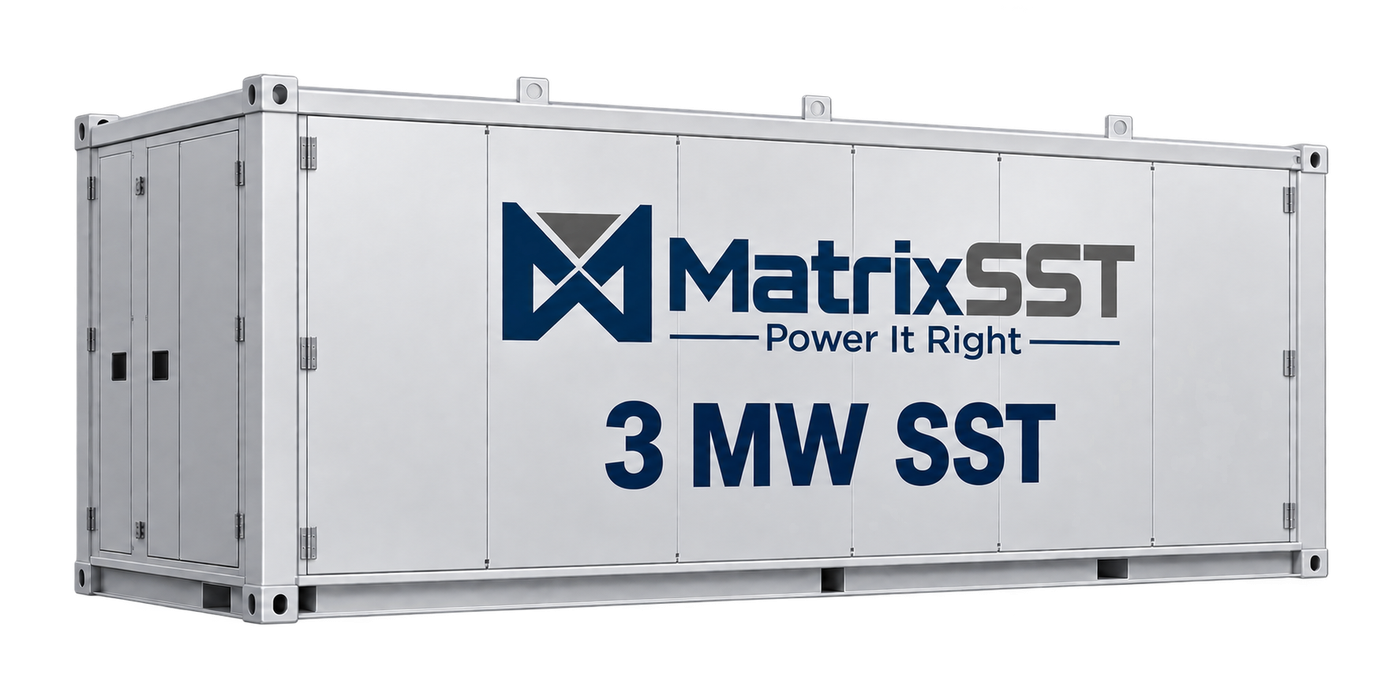
3.0 MW
Rated power
13.8 kVAC
Grid interface
800 VDC
Output voltage
98.5%
Highest efficiency target
Why SSTs now
Solar and batteries are DC
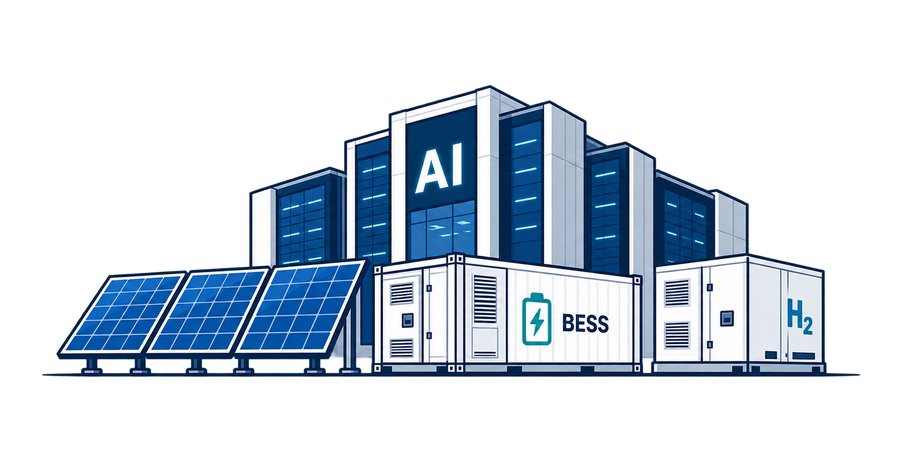
Moving toward 800 VDC

Emerging high-power charging is DC
One SST platform connects the MV grid to multiple DC-native applications.
Bidirectional • Intelligent • Grid-interactive
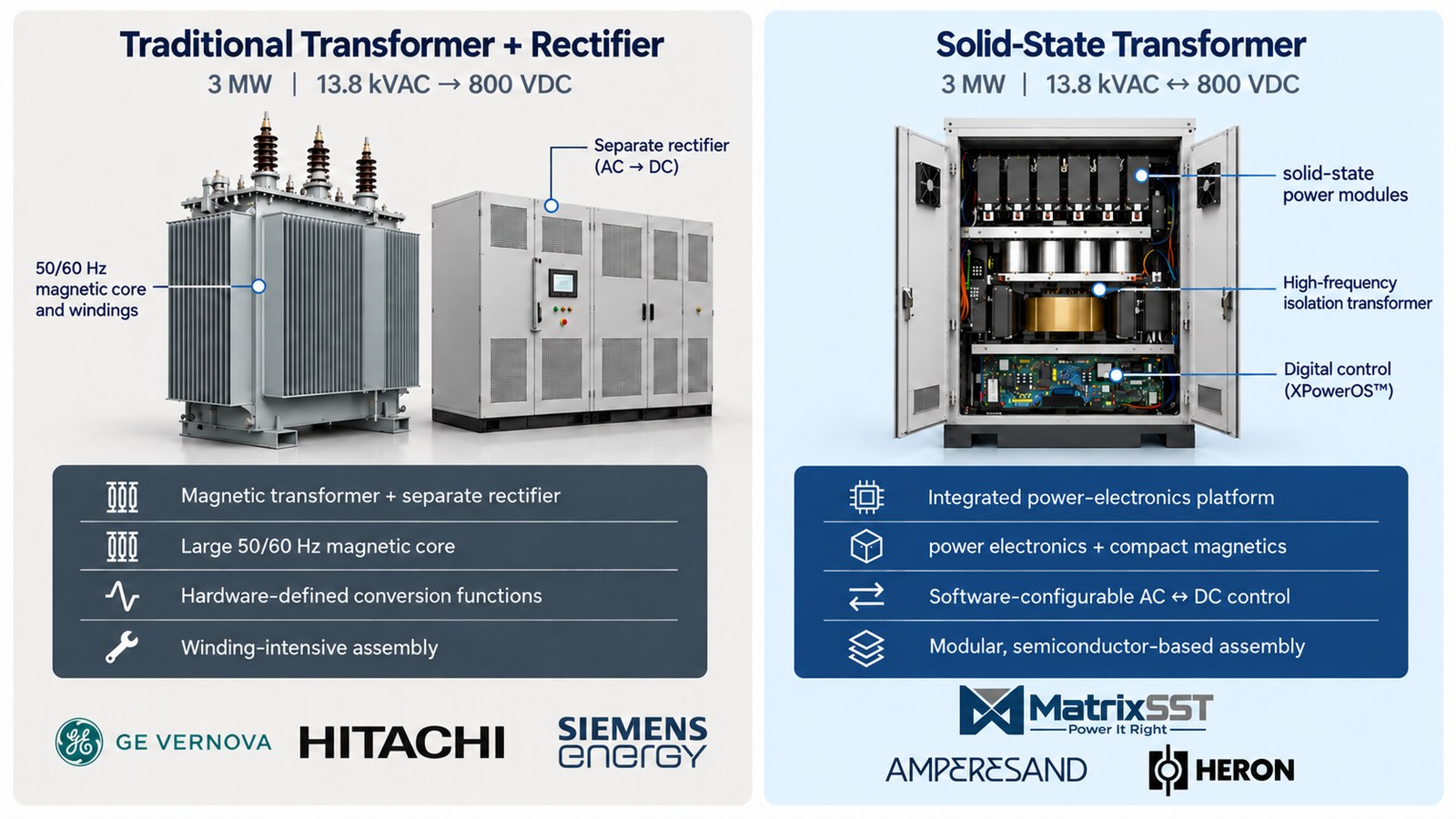
Product
An integrated medium-voltage-to-DC conversion platform for customer and partner pilots.
Focused MV-to-DC conversion, with project interfaces defined collaboratively.
Preliminary design targets
Applications
Application I
An integrated MV-to-DC interface for renewable generation and storage.
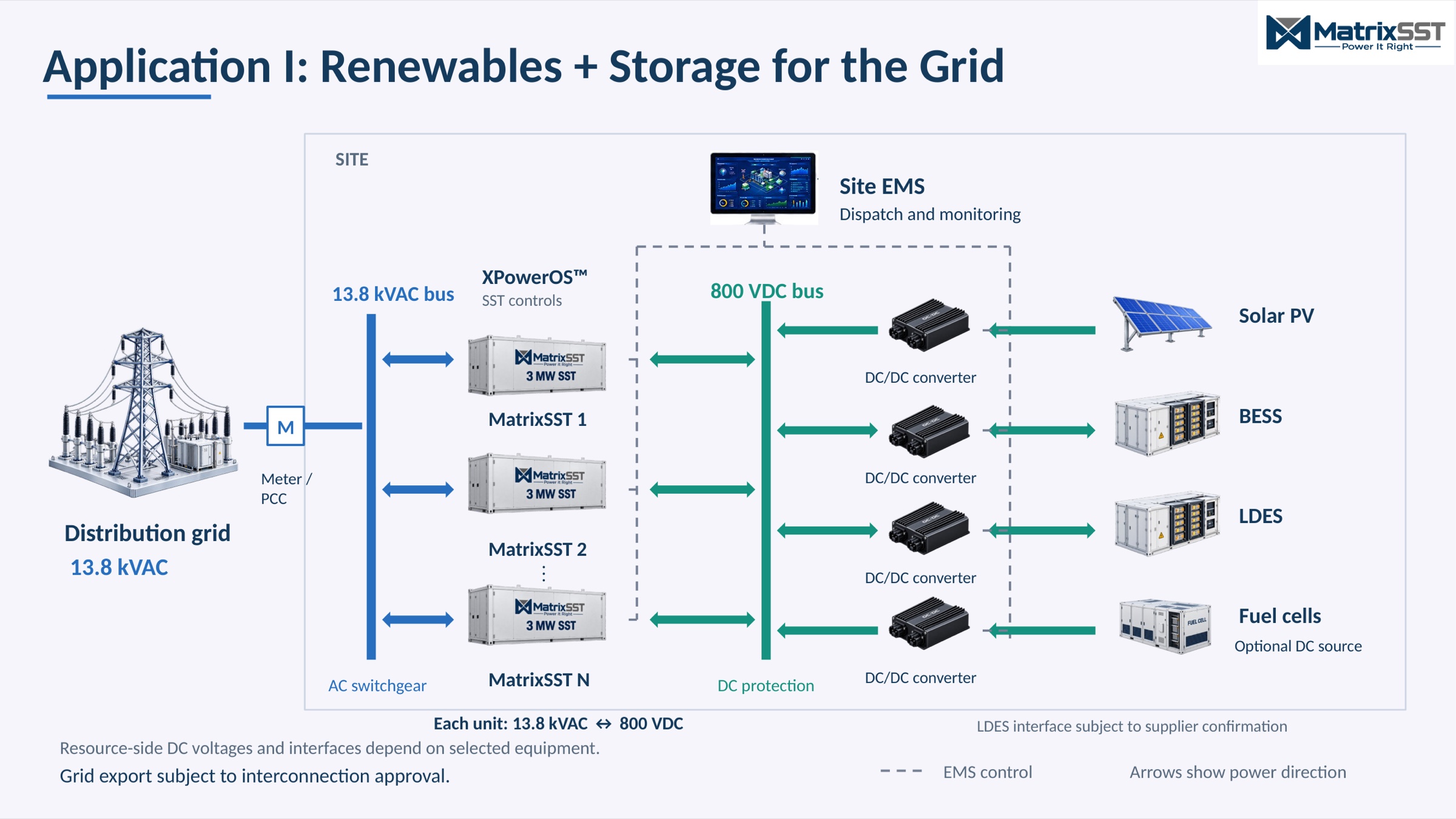
Focused MV-to-DC conversion, with storage and resource interfaces selected to fit each project.
Application II
Integrate grid power and on-site energy resources into a scalable DC campus architecture.
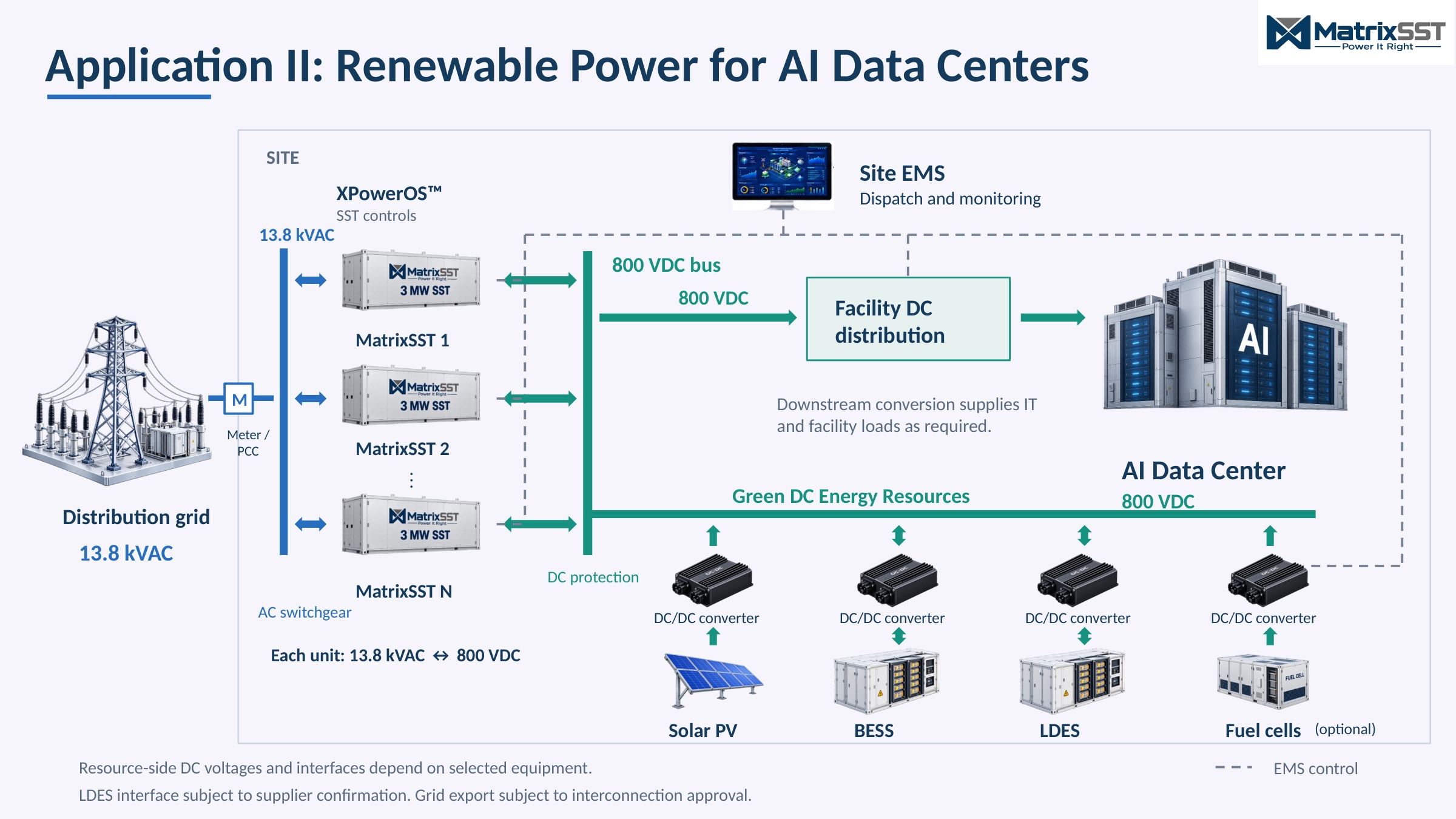
Focused MV-to-DC conversion, with storage and resource interfaces selected to fit each project.
Application III
Share DC power infrastructure across truck, bus, and commercial-van charging.
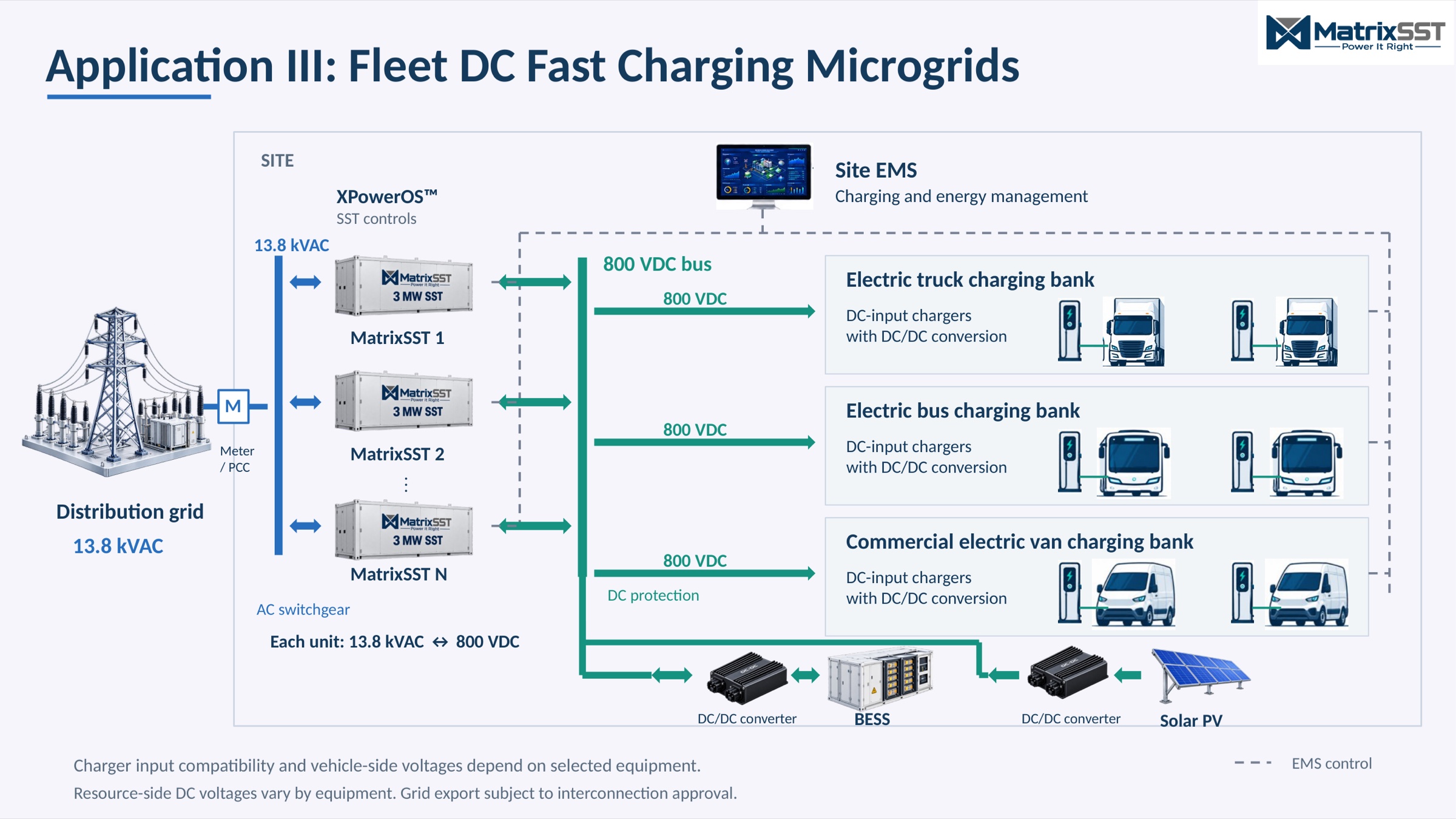
Focused MV-to-DC conversion, with storage and resource interfaces selected to fit each project.
Application IV
Balance loading across nearby distribution networks to make better use of existing capacity.
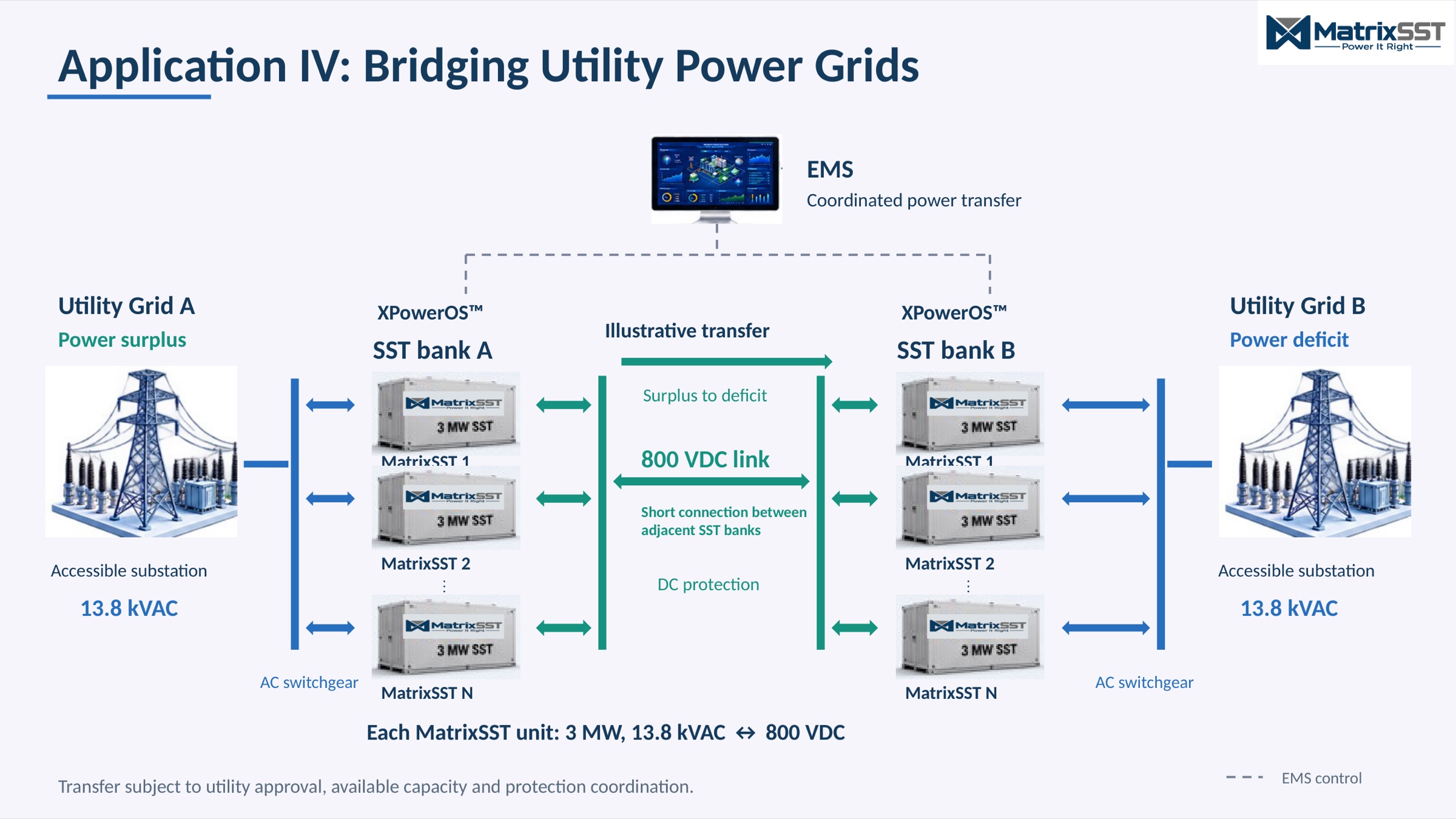
Focused MV-to-DC conversion for controlled grid-to-grid power sharing and better use of existing infrastructure.
Platform
MatrixSST-developed • Owned • Controlled
Control • Protection • Orchestration
Cost-optimized • Manufacturable
Commercially available, mass-produced components
3 MW first → Broader MV variants
6–35 kV and 1–20 MW designs
Highly experienced MV team
| Feature | Traditional Distribution Transformer System* | MatrixSST Product Targets |
|---|---|---|
| Integration | Separate transformer, power electronics and controls | Integrated conversion, isolation, and controls |
| Conversion | 13.8 kVAC → 600–690 VAC → 800 VDC (external rectifier / PCS) | Integrated 13.8 kVAC ↔ 800 VDC |
| Power Rating | ~3.15 MVA transformer / ~3 MW DC system output | 3.0 MW DC output |
| Software Platform | Separate vendor controls and integration | XPowerOS: Software-defined bidirectional power control |
| Grid Capabilities | External equipment for grid support | Integrated grid-forming, voltage and frequency control |
| Control Response | Response depends on PCS/controller | Sub-millisecond spike detection/control (planned) |
| Highest Efficiency | ~96.5 – 98.0% estimated | 98.5% target |
| Lead-Time | 12 – 24+ months | 3 – 6 months target when available to order |
Fewer components • Shorter equipment lead time targeted • Integrated power controls
*Legacy reference: ~3.15 MVA transformer plus bidirectional PCS/rectifier, controls, protection, cooling and switchgear/ATS to convert 13.8 kVAC to regulated 800 VDC. Schneider Trihal and Prolec GE.
30
experienced MV hardware engineers (10 full-time, 20 contractors)
15+ years
experience among key engineers
6–35 kV · 1–20 MW
systems designed, spanning conversion, controls, thermal design, packaging and testing
Example systems the team previously built
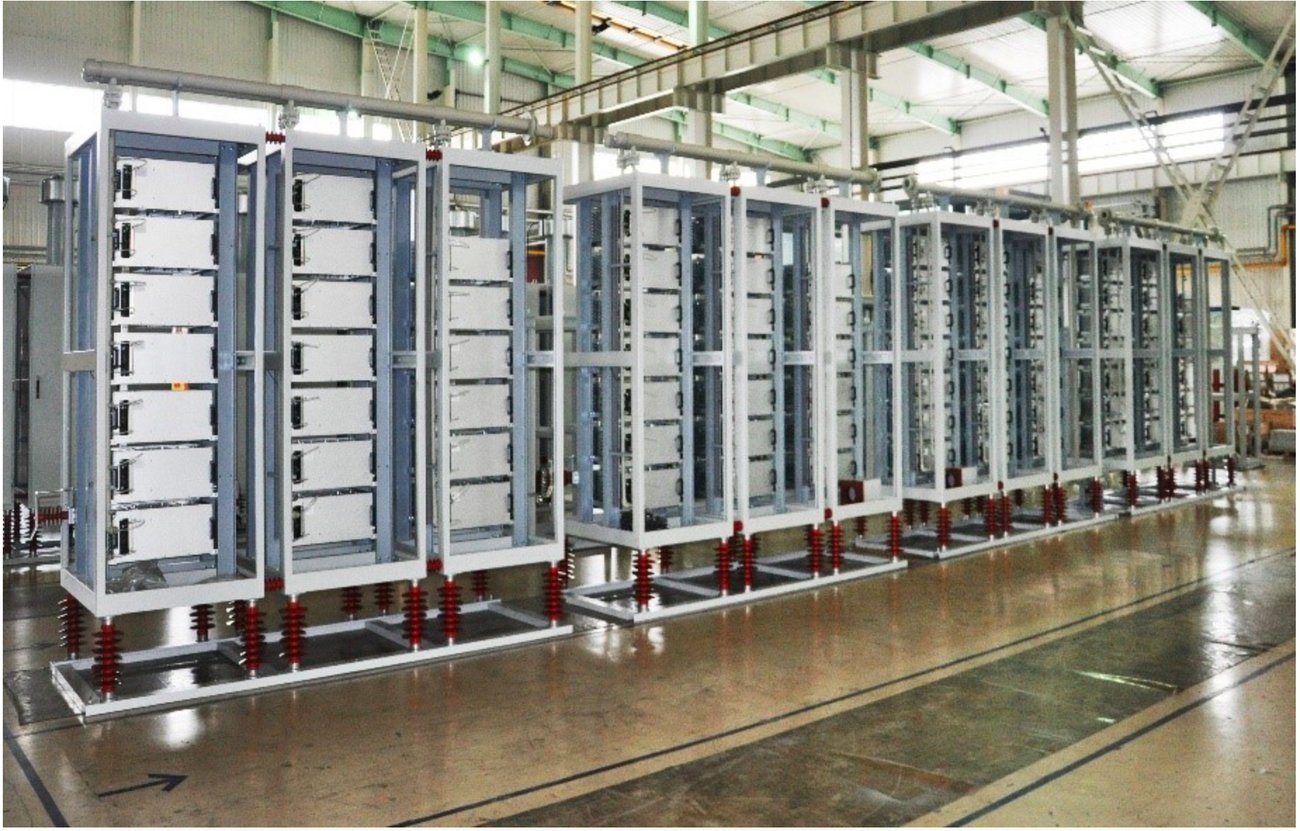
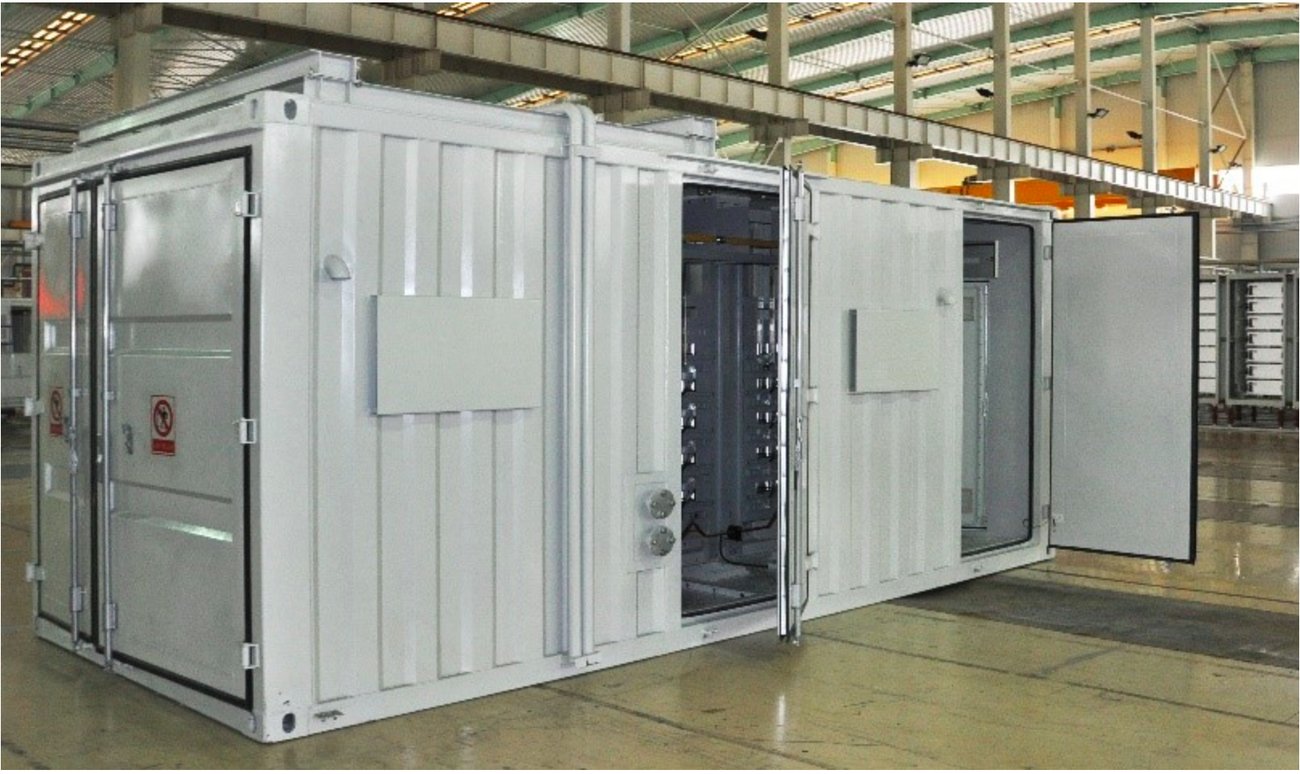
Proven MV experience de-risks SST development and commercialization.
Roadmap
Target development and deployment milestones.
2026
3 MW prototype + core capability demonstration
Q1 2027
Integrated 3 MW hardware + XPowerOS™
Q2–Q4 2027
Certification, reliability testing + customer validation
Q4 2027
Qualified product + initial customer shipments
A validated but still-emerging SST category creates room for differentiated commercial execution.
6–35 kV / 1–20 MW experience
Field trial operational pilot Q1CY27
Existing team + outsourced production
Pilots
Work directly with our product and engineering leadership to define and validate your pilot.
Identify a suitable site, confirm technical fit, and jointly define the pilot.
Next step: Schedule a joint technical scoping meeting.
Preliminary information is sufficient to begin.
Contact
Preliminary information is sufficient to begin. Tell us the application, the site and the timing, and we will review technical fit with you.
Thanks! We'll be in touch shortly.